Specification
Missing, undefined, or contradictory specifications 60
Working code exposed decisions that static screens could leave undefined.
I built prototypes with Claude Code and defined screens and behavior in Storybook. By reviewing a working product with product managers and engineers, we resolved 131 specification gaps and UX improvements before implementation.
The full process, breakdown of all 131 findings, and adoption requirements are on CADDi Tech Blog.
Read the full article on CADDi Tech Blog (Japanese)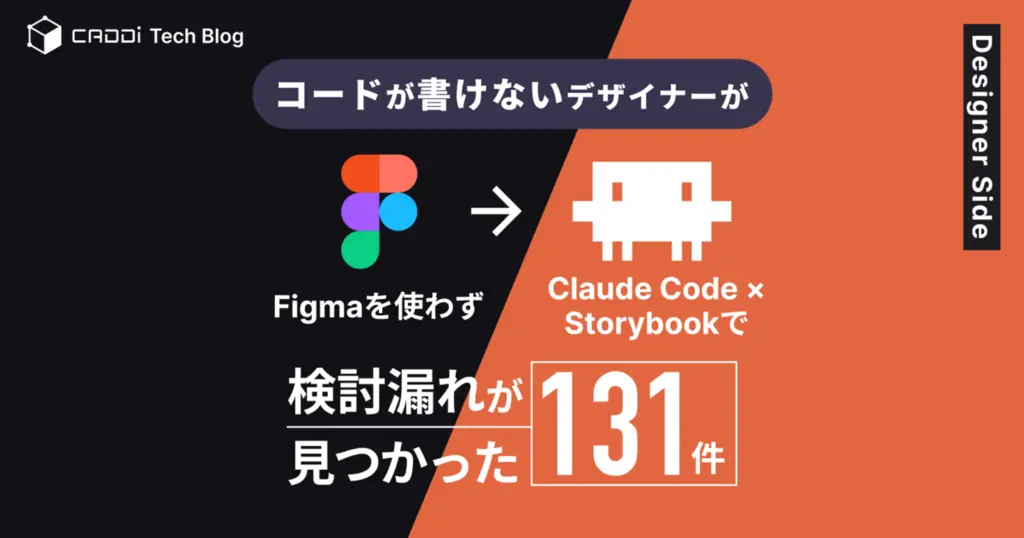
01 — The Problem
A static design can look complete without defining when errors appear, how empty states behave, what happens with long strings, or which sort order is the default. Undefined behavior and conflicts with the existing product were being carried into implementation.
02 — The Approach
Validate screen structure and information priority
Define states and interactions with React and the internal design system
Document columns, statuses, filters, scrolling, i18n, and more in MDX
Recreate real work with product managers and engineers, completing decisions before implementation
03 — The Result
Over roughly six weeks, we ran six walkthroughs across 31 screens, 49 Stories, and 39 MDX screen specifications, completing decisions that static screens had left unresolved.
Resolved before implementation
131items
Specification issues and UX improvements resolved before implementationSpecification
Missing, undefined, or contradictory specifications 60
Working code exposed decisions that static screens could leave undefined.
UX Improvement
UX improvements 45
Recreating real work through interaction revealed issues invisible in static designs.
Implementation
Implementation errors and conflicts with the existing product 26
Referencing production code exposed unintended divergence before implementation.
04 — What Changed
Writing code was not the goal. By bringing screens, states, interactions, and specifications into one place and reviewing a working interface with product managers and engineers, we moved decisions out of implementation and into design.
Storybook was not a replacement for the production frontend. It was an intermediate artifact for aligning product behavior and UX decisions before implementation.
05 — Starting Point
Starting with almost no Git experience, I moved into code-based specification design with support from engineers and Claude Code. Within two months, my contribution grew to 251 commits across 177 files.