Designed for everyone, adopted by roughly 200 companies nationwide
As the first product designer at a seed-stage startup, I led work from field research through UX and UI. I designed an experience that collects data from every operator as soon as a device is plugged into a vehicle's USB port.
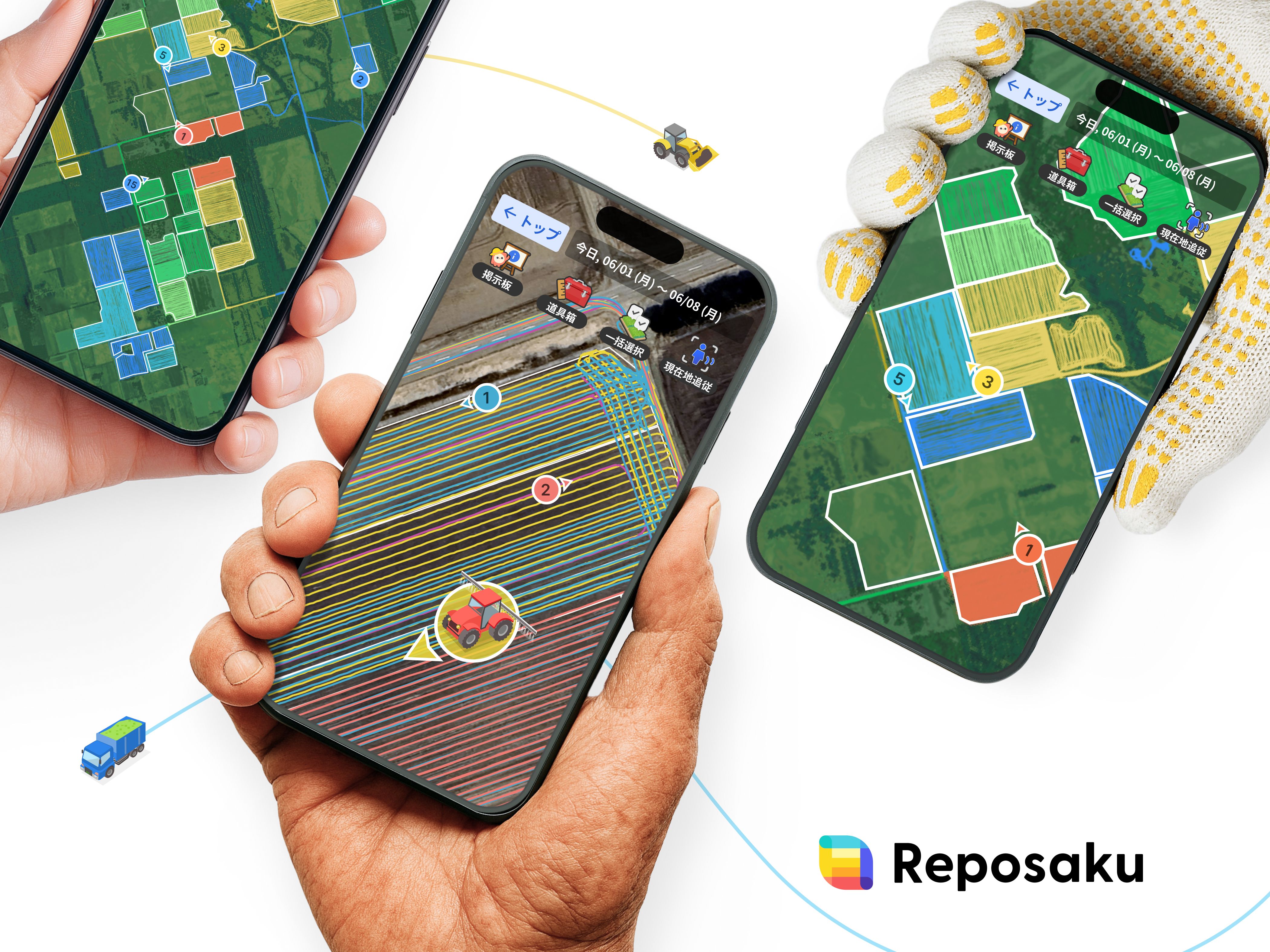
* Radio-call and efficiency figures come from an independent impact study of a customer organization.
01 Field Research
Go into the field and redefine the problem
Context
Reposaku's vision of a fully automated outdoor farm required precise activity data from everyone in the field. But farmers told us, “Technology isn't for people like us.”
At first, we assumed that unfamiliarity with technology was preventing participation. Perhaps a UI designed for older users would solve it. To test that assumption, I worked on a farm myself and observed people in a smartphone class for older adults.
Research 1
Understand farming firsthand
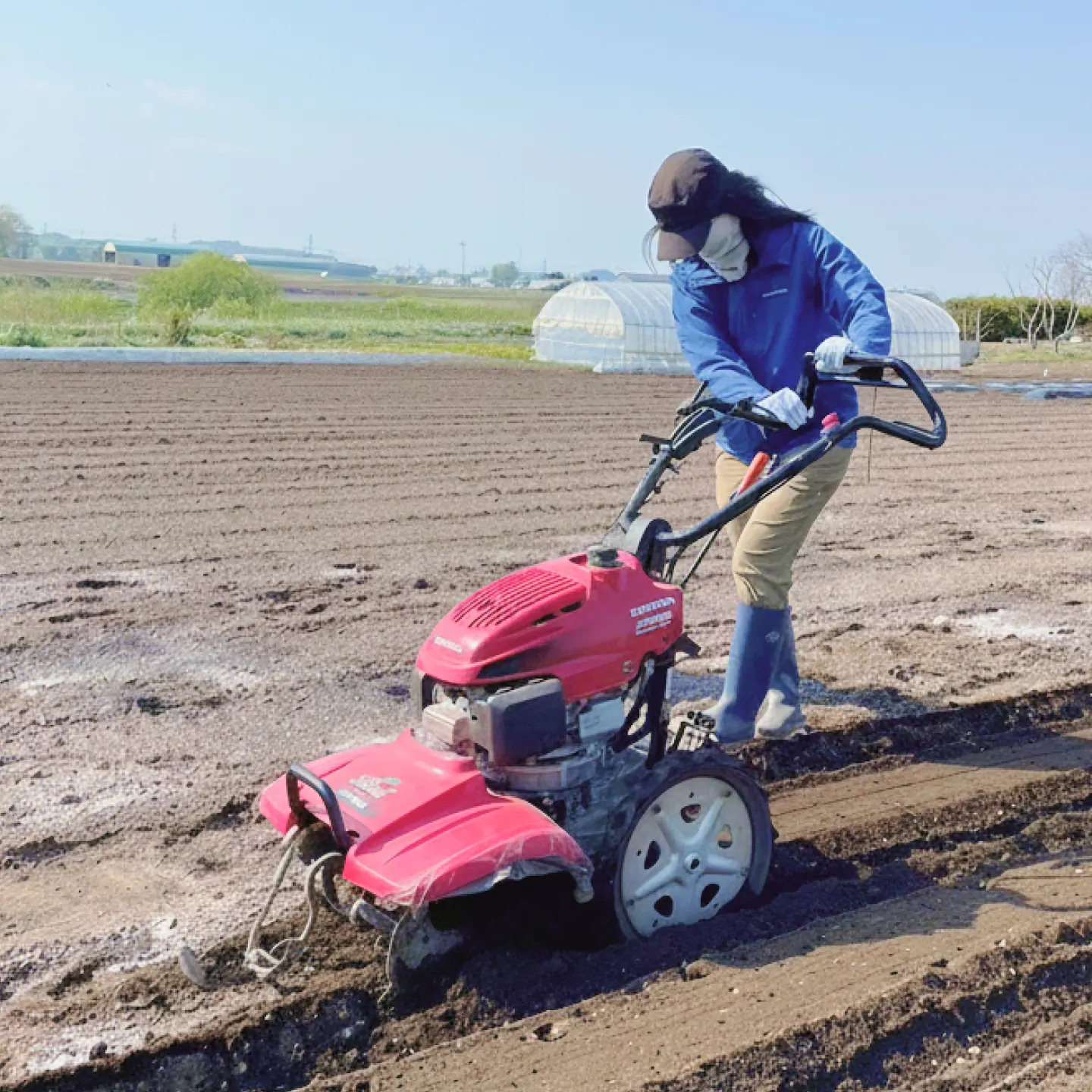
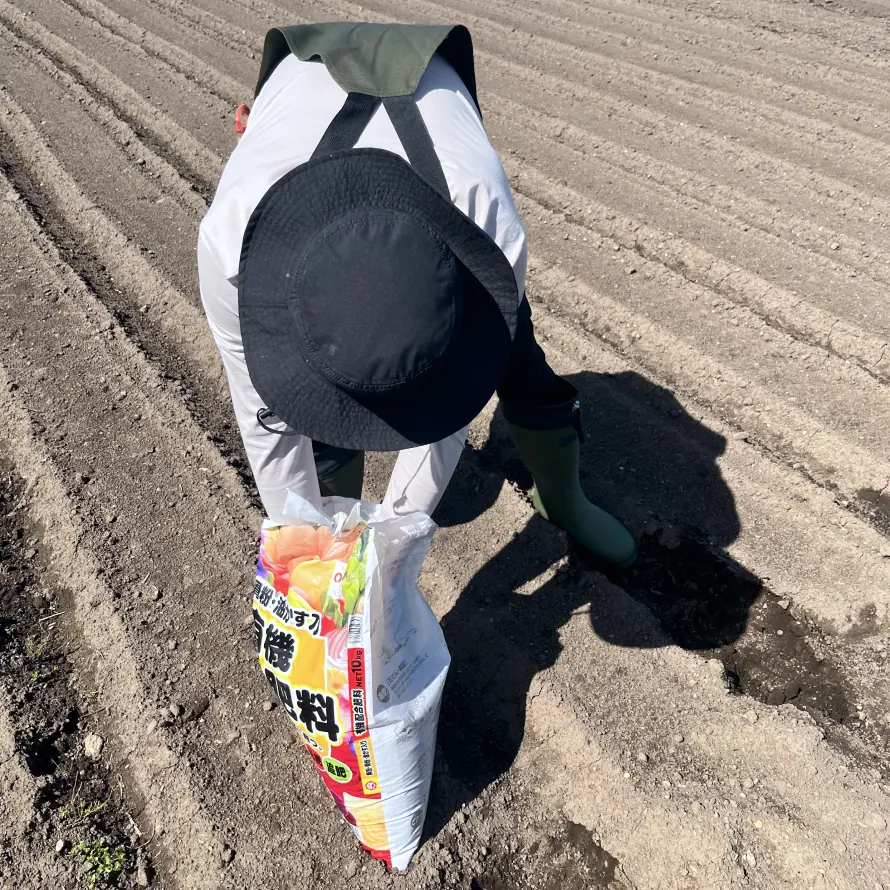
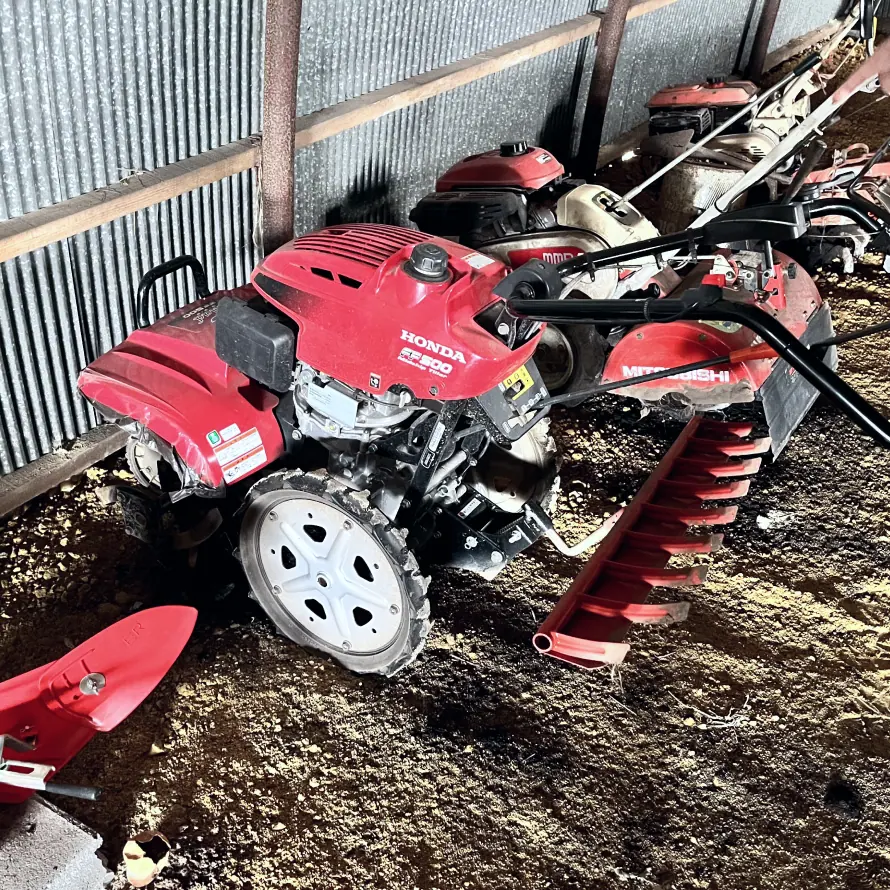
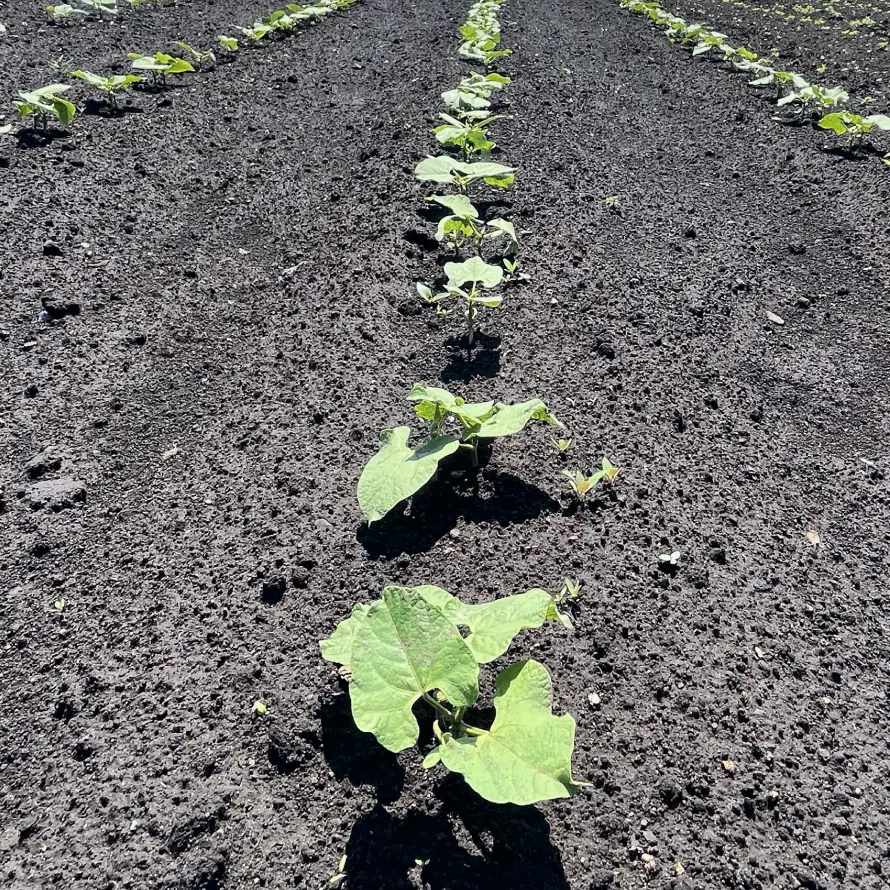
I borrowed a field from a nearby farmer and grew fourteen kinds of vegetables over two years. Most attempts failed. Soil, weather, insects, and wildlife created countless interacting variables, making causes hard to isolate. Sometimes the next chance to test an idea was a year away.
A farmer's intuition was the result of layered, complex decisions that could not be easily replicated.
Observed
- Text on a screen disappears in strong sunlight
- Gloves and sweaty hands make precise input difficult
- During peak season, there is no time to stop working
Research 2
Observe the moment “I can't use this” takes hold
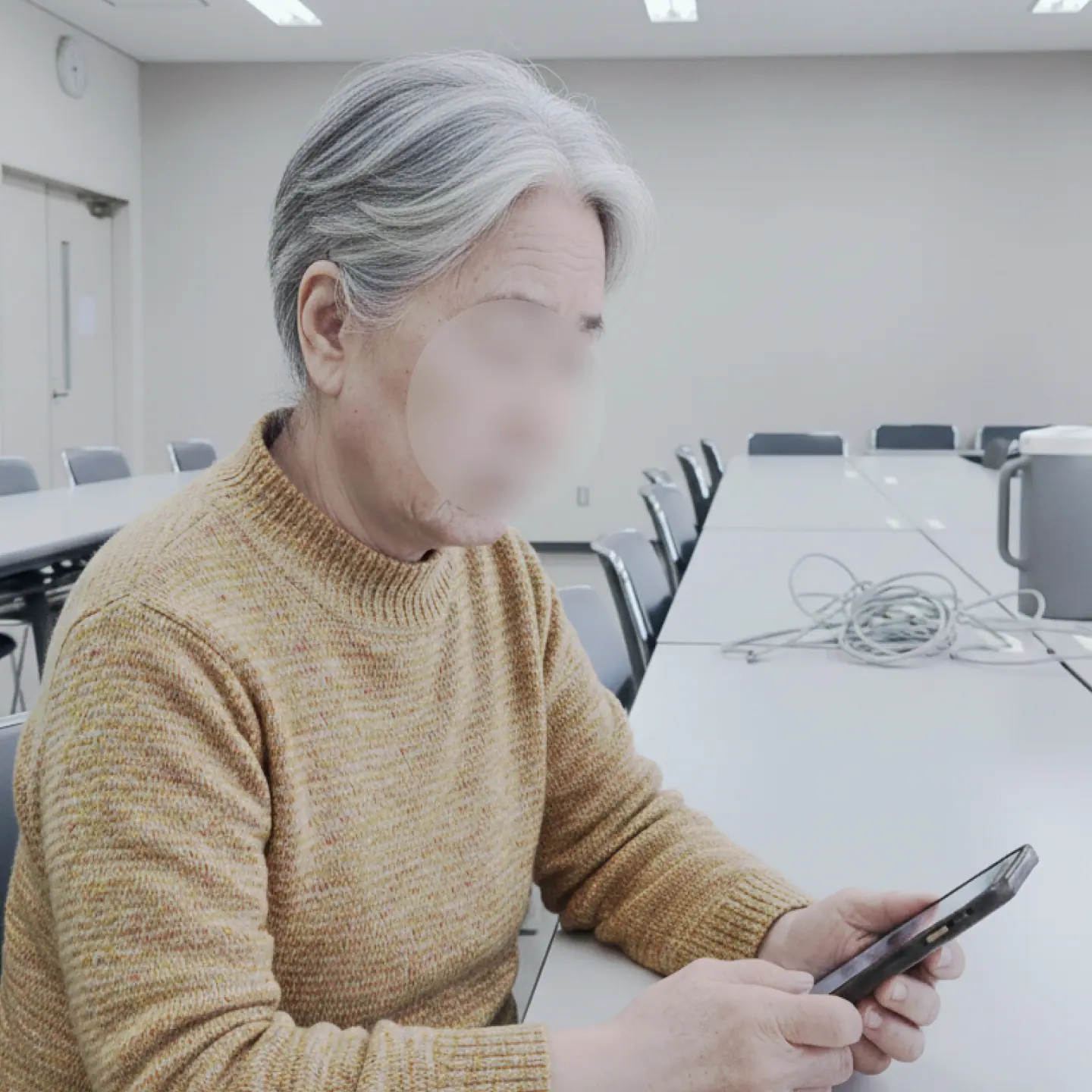
I volunteered at a smartphone class for older adults and observed where digital interactions broke down. One woman was learning mobile payments for a trip with her grandchild. After repeated failures, she said, “I must not be smart enough,” and stopped coming to class.
A failed interaction did more than block a task. It taught people to believe they were incapable.
Insight
“Bad with technology” was not the cause. It was the result of design that ignored the field, compounded by repeated experiences of failure.
02 Product Decisions
Go beyond “accessible to older users” and create an experience people are proud to use
Decision 1
Question whether a screen is needed,
then remove interactions from the product itself
Instead of making every screen easier for older users, I reduced the number of screens and actions required to get started.
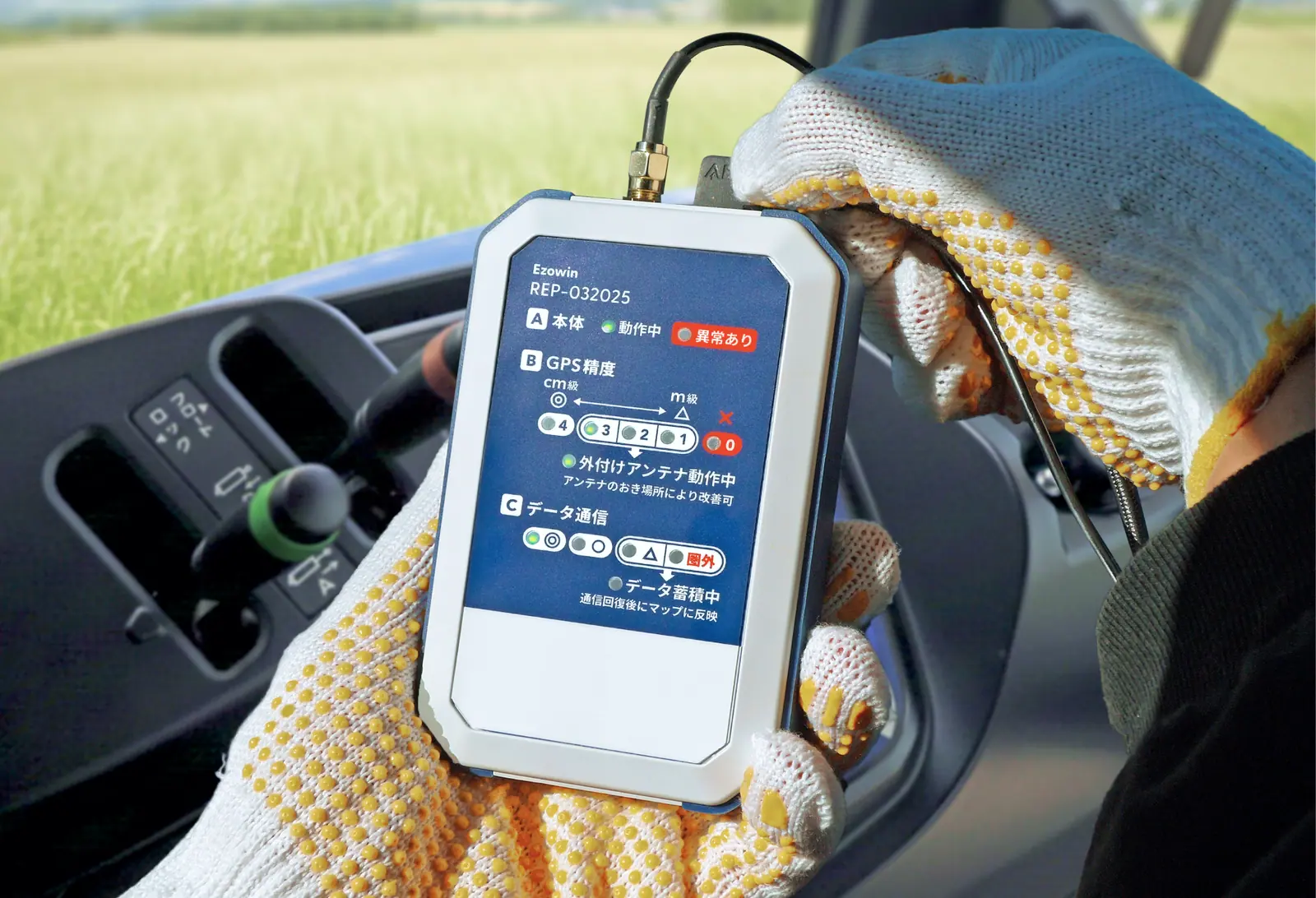
Operators only plug a device into the vehicle's USB port. There is no app to install, setup flow to complete, or recording button to press. People viewing the map scan a QR code on a printed membership card. Core features work without sign-up, an ID and password, or pre-registering fields.
Instead of teaching people more steps, I designed a system they could join without performing them.
Decision 2
Give people a reason to want to use it
Removing friction and making the product usable by anyone was not enough to achieve full participation. People needed a reason to want to use it.
In the smartphone class, even people who struggled with their phones enjoyed mobile games. Farmers also took pride in showing one another new vehicles and systems.
I designed the live map, synchronized with real vehicles, to make watching movement enjoyable and worth showing to others.
Farmers began proudly showing Reposaku to neighbors. “What is that? It looks great,” spread by word of mouth and helped adoption grow.
03 Impact
From “technology isn't for us” to “look how good this is”
The change went beyond how people felt about the product. It changed how teams worked in the field.
Teamwork
Harvesting grass involves cutting, gathering, transporting, and compacting. Multiple vehicles with different roles move in sequence, each continuing the work of the one before it.
Previously, the foreman called each vehicle by radio or phone to ask where they were and how far they had progressed, then issued instructions one by one.
After adoption, everyone shared location and progress through the map. Operators noticed delays themselves and sent other vehicles to help. Precisely recorded routes from experienced workers also became learning material for younger staff.
The team shifted from waiting for a foreman's instructions to acting on shared situational awareness.
Operational Impact
- Reduced radio calls for vehicle locations by 84%
- Improved work efficiency by 18%
- Reduced administrative work by 58%
- Used expert routes for training and work planning
Business Impact
- Adopted by roughly 200 companies and 24 agricultural cooperatives across Japan
- Expanded beyond agriculture to 11 municipalities for snow removal, delivery, wildlife response, and more




2025 Good Design Gold Award and Best 100
Selected for the Good Design Best 100 from 5,225 entries, then named one of only nineteen Gold Award winners.
“It respects the dignity of farmers while drawing beauty from the effort of everyone working in the fields.”
Hong Khai Seng, Design Director — Good Design Award 2025, My Favorite Selection
The jury praised a service-design philosophy grounded deeply in users. Careful observation of diverse field needs shaped an intuitive environment for older and less experienced users, with thoughtful safety measures and practical responses to real problems throughout.
Jury evaluation